THE OTHER SIDE
Through the Wound, the World
(August 2025)
Paper delivered to the International Ecoliteracy Research Festival: READ HERE
Note…
This is a paper I presented at the International Ecoliteracy Research Festival (Himmelbjerggården, 14th August 2025). I came to the Festival as an independent scholar, although I’d previously instigated connections between the Festival organiser (CUHRE) and The Ecological Citizen. I also have little to no background in the field of education, which was the primary area of study for most participants. However, my work is relevant in that it extols presence and vulnerability, resistance and enrichment, which together create the ground for all ecoliteracy.
At its core, my paper, structured as a walk from the city towards a place of solace and understanding, argues that modernity closes us off from what I call ‘the other side’ — the textured, storied, living world. I employ Byung-Chul Han’s metaphor of the wound, alongside Patrick Curry’s thoughts on the relational dynamics of wonder, to explore areas such as capital and communication, art and activism, working in and for the land, the necessity of contemplation, respecting mystery, and accepting death. What I’ve tried to do is blend the ideas of my two primary authors together. I bring in Han’s concepts of ‘smoothness’ and ‘transparency’ to complement Curry’s ideas about wonder/glamour, thereby softening the former’s more diagnostic and (at times) fatalistic approach.
Ultimately, I wanted the paper to provide a structure that links the wound with wonder and to expand on how experiences of opening can lead to meaningful action in life. Himmelbjerggården was a unique place to explore and feel out some of my ideas concerning the wound and the experience of wonder, adding what I could with my own insights and life experiences. That said, in the context of the Festival, some of the subject areas and finer theoretical points that I discuss are less relevant to the aims of the gathering, which became particularly apparent throughout the first day. Secondly, many offerings were far looser and more playful, whereas my presentation was wholly theoretical and rather complex for the circumstances. In hindsight, I might’ve focused on just one or two subjects rather than trying to encompass a multitude of issues with modernity into a single journey. I suppose it’s all part of the learning process. Ultimately, I’m glad I presented this paper and put a lot of effort into it.
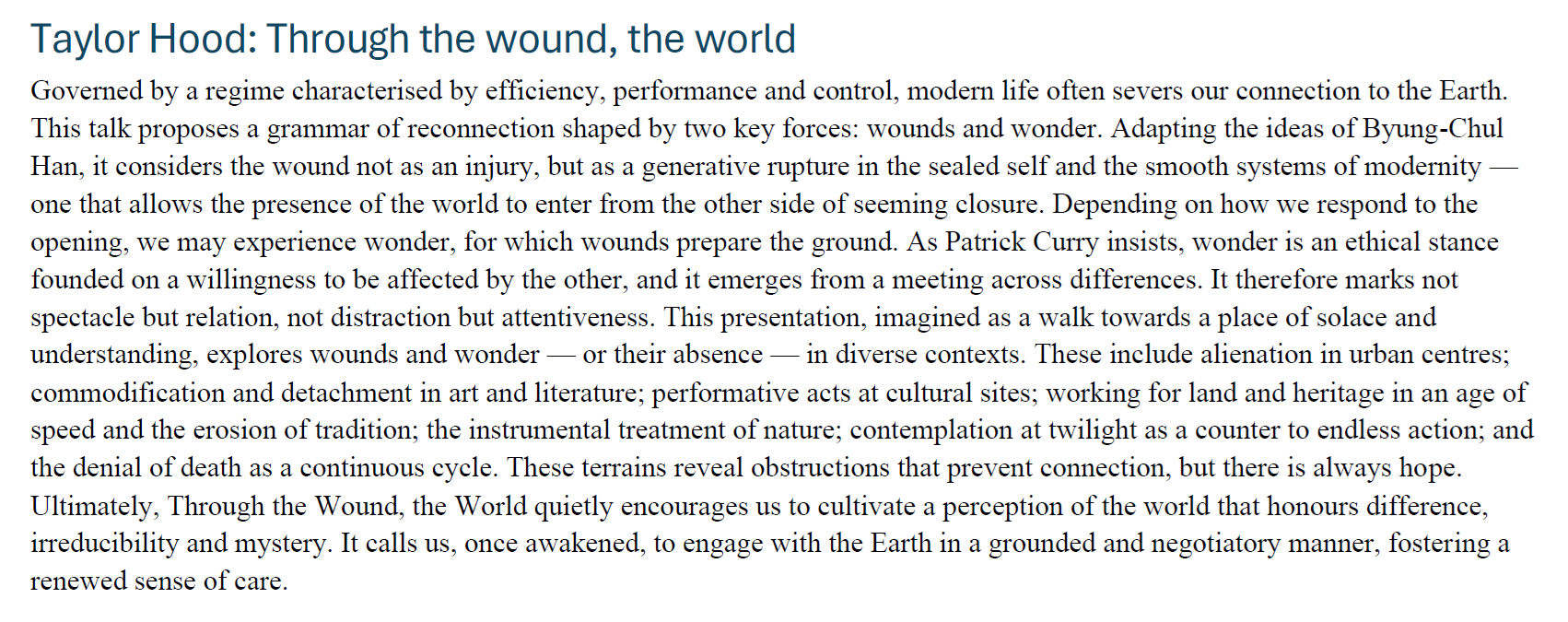
I have always been drawn to those openings that lead out of our stifling modern world towards a place of solace and understanding. For this reason, I often return to — and love to dwell in — threshold places and moments, whether in natural landscapes, at cultural landmarks, or even in the virtual realm. This desire translates into a fascination with material and experiential thresholds that mark transition, such as gates, windows, doors, woodland edges, or twilight. Only recently, however, have I come to recognize how existing theories offer a framework through which I can articulate more clearly what has long drawn me to these thresholds. What follows is a short explication of the two main experiences/metaphors that best align with my philosophy of ‘the other side’ — that is, the need to regain connection with the textured, storied, and living world through an awareness of what closes us off from it. The first concept is the wound, which has recently offered the greatest leap in understanding; the second is wonder, an area I have already begun to explore.
The Wound
We are increasingly disconnected from the textured, storied and living Earth. It is my view that we must respond to this separation by attending to what pierces the surface of our daily reality — moments that disrupt and decentre, and yet invite us back into relationship with the world.
At the heart of this enquiry lies a guiding metaphor: the wound. Cultural theorist Byung-Chul Han describes the wound as an ‘opening, an ear for the other’, which breaks through the sealed circuits of our self-centred existence. In the context of Han’s constellation of concepts like ‘negativity’, ‘smoothness’ and ‘transparency’, wounds are not injuries in the usual physical sense, but openings in our impervious selves and breaks in the systems we construct, allowing the world to enter from the other side of seeming closure.
Wonder
Wonder, the heart of enchantment, is always directed at an irreducible other. Patrick Curry describes wonder as fundamentally relational, comprising ‘an encounter across a gap of difference. And in that meeting, the gap is bridged’. To experience wonder, he suggests, requires certain ethical dispositions, such as ‘openness, respect and tolerance’. A wound, in the sense I use it, is not one of these dispositions but rather the initial rupture in the closed self that makes such openness possible. It the crack through which relation might begin. Wonder, as a positive and life-affirming response, may follow from the generative rupture of the wound.
For further detail, please see my video explanation of wonder, my series on enchantment for The Other Side channel (with Patrick), and, finally, the section dedicated to wonder and spirituality on this page.
* Previously, I often framed my thinking through the phrase ‘walking with the Earth’ and the idea of movement towards a place of solace and understanding. I now think of this journey as one that is opened by the exposure inherent in the wound and guided by wonder.
Fragmentation
The phrase the other side also holds meaning for me in a more typically ecological sense. My background in studying habitat fragmentation has shaped how I think about crossings and continuities in the living world. In landscape ecology, fragmentation describes the breaking apart of habitats into smaller, isolated patches, limiting the movement and interaction of species. What matters in that field are the crossings that remain — the corridors, bridges, and margins that allow life to move between divided spaces.
What follows is a broader exploration of my stances on various issues relating to ecology and heritage, written at an earlier date, all of which is relevant in some way to the other side.
THE NATURAL WORLD
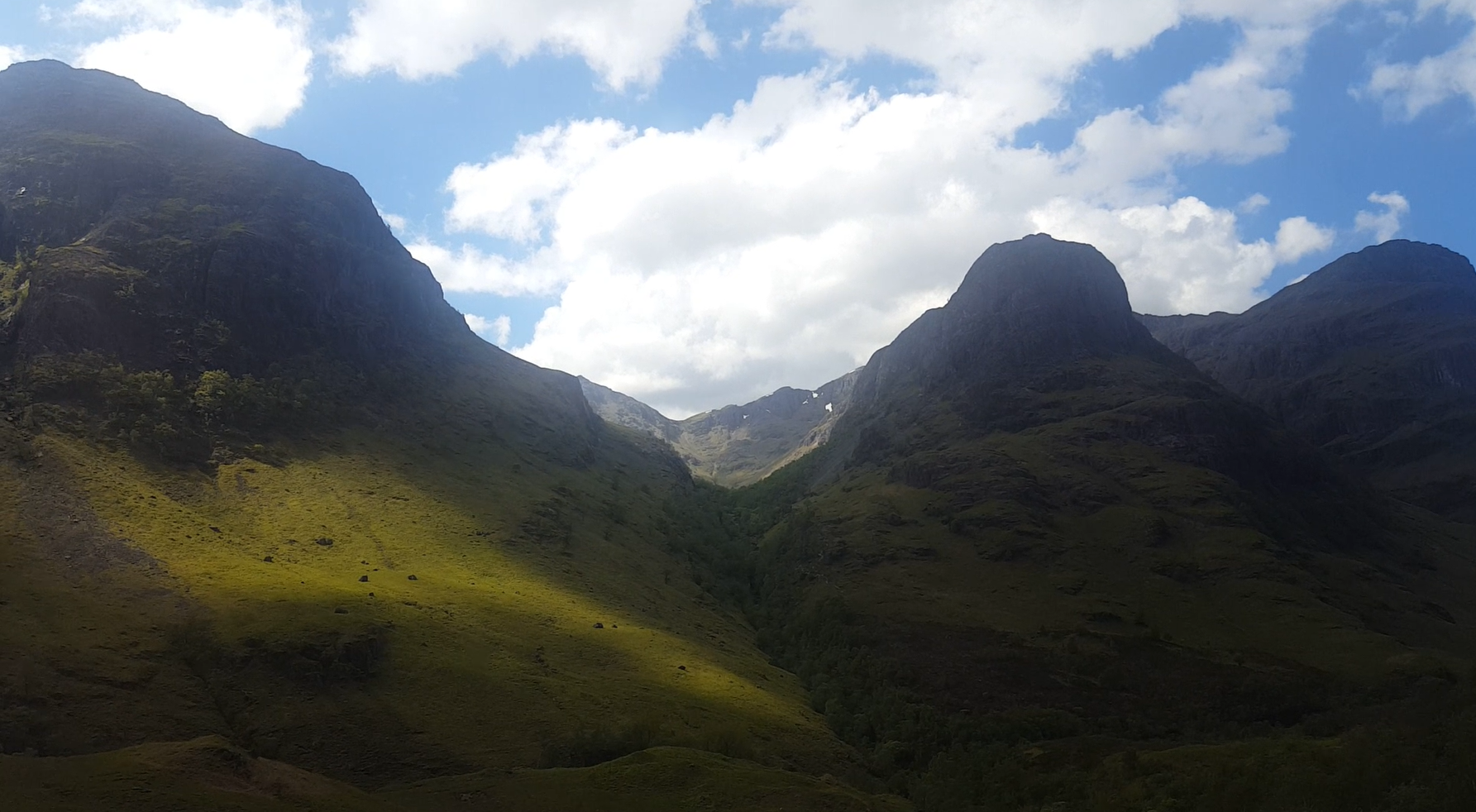
The source of all that we do, no matter how refined or complex, is nature. Living in this more-than-human world sets important and necessary limits on our lives — lives that are incontestably influenced by the many agencies that surround us. The attempt to transcend our animal natures is therefore misguided and harmful. Instead, we must learn to accept our place on this storied and beautiful planet, which sustains but vastly exceeds us. This is important because when nature is discovered and appreciated for its own sake, it often leads to a non-anthropocentric outlook. This stance can facilitate an attitude of humility toward all Earthlings, including humans.
To be in accordance with nature is to be fully human and to accept death, the ultimate limit, as natural and just. This is why I don’t hold to the ‘green misanthropy’ of some nature advocates, nor the world-denying ideas of the transhumanists, both anti-human in their own way. Yet the issue of misanthropy is just one of the many complex issues that have the potential to alter our view of nature and how we approach the current ecological catastrophe.
I also believe that the recent fervour for anthropocentric identity politics, according to which environmental issues are just one part in the litany of societal issues afflicting humans, should be tempered, especially its vigorous Critical Social Justice form.
As for the practice of ecology, understanding and managing ecosystems is necessary due to the damage we’ve caused; however, it’s important to be wary of the dominance of neoliberal thought in conservation (‘ecosystem services’ and ‘natural capital’), as well as the scientific reductionist perception of nature more generally.
Finally, in terms of the study of nature from a literary and philosophical perspective, I tend to value older approaches rooted in Romanticism (for all its fatuous individualism), meaning a simpler appreciation of nature as a subject of veneration rather than the neologism-laden and even human-centred postmodern schools of thought.
“I believe that the wildest flights of the fancies of any of us have their homes with Mother Earth.”
– Lord Dunsany
“The world has changed. I see it in the water. I feel it in the Earth. I smell it in the air. Much that once was is lost, for none now live who remember it.”
– J.R.R. Tolkien
“[T]his was the essential love of Nature in me, this the root of all that I have usefully become, and the light of all that I have rightly learned.”
– John Ruskin
Wonder, Religion and Spirituality
Enchantment is an experience that can profoundly change how we understand and interact with our world. To be enchanted is, as the etymology of the word implies, to be ‘in a song’ or any narrative, and the greatest story is of course that of the Earth. Looking at its dynamics more closely, enchantment is an experience of animistic and therefore non-anthropocentric wonder at an enchanting other, whether that be a person, a tree or even a painting. In other words, enchantment respects immanent meaning shared between Earthlings. This notion of relational meaning in a co-inhabited world is something about which I care deeply.
The values inherent in a stance of wonderment are fundamentally at odds with the doctrine of mastery shared by monotheistic religion and secular notions of progress. Relatedly, they are also incommensurable with religious supernaturalism and scientific materialism. It is important to uphold the importance of scientific materialism as a way of affirming our animal origins and understanding more about our world, yet this way of knowing can easily be distorted into an aggressive reductionism that devalues our most meaningful experiences. Regarding religious supernaturalism, my starting point is to be wary of any transcendent source since this can turns one’s attention away from the phenomenal world. At the same time, I sit within a position of true uncertainty regarding the divine and therefore hold open the idea of a god or gods as a source of unconquerable mystery and creative inspiration. I’m equally aware of and sympathetic to the non-anthropocentric teachings of some religions (which run counter to equally prevalent anthropocentric imperatives), as well as the emphasis on the power of story and the comfort of ritual known to many world religions. Ultimately, in my view, religion cannot be designated wholly good nor bad.
What’s more troubling, I think, is the dominance of the secular susceptibility to mastery through the three engines of capital, the state and technoscience (Patrick Curry’s ‘Megamachine’), intermixed with the hyper-individualism of the neoliberal order and the dominance of Critical Social Justice, which is itself taking on quasi-theological characteristics. Arguably, we’re living through the most anthropocentric time ever despite our increased awareness of ecological degradation and anthropogenic climate change. We must instead learn to walk with enchantment and take on the lessons it imparts to us, when it deigns to do so, since this can lead to the adoption of a post-secular and Earth-centred ethics of sacrality.
“[T]he ontology of enchantment is a relational, perspectival and participatory one.”
– Patrick Curry
“There is […] a close affinity between the attitude of wonder itself — non-exploitative, non-utilitarian — and attitudes that seek to affirm and respect other-being.”
– R.W. Hepburn
“The House is valuable because it is the House. It is enough in and of Itself. It is not the means to an end.”
– Susanna Clarke
ARCHITECTURE AND ART
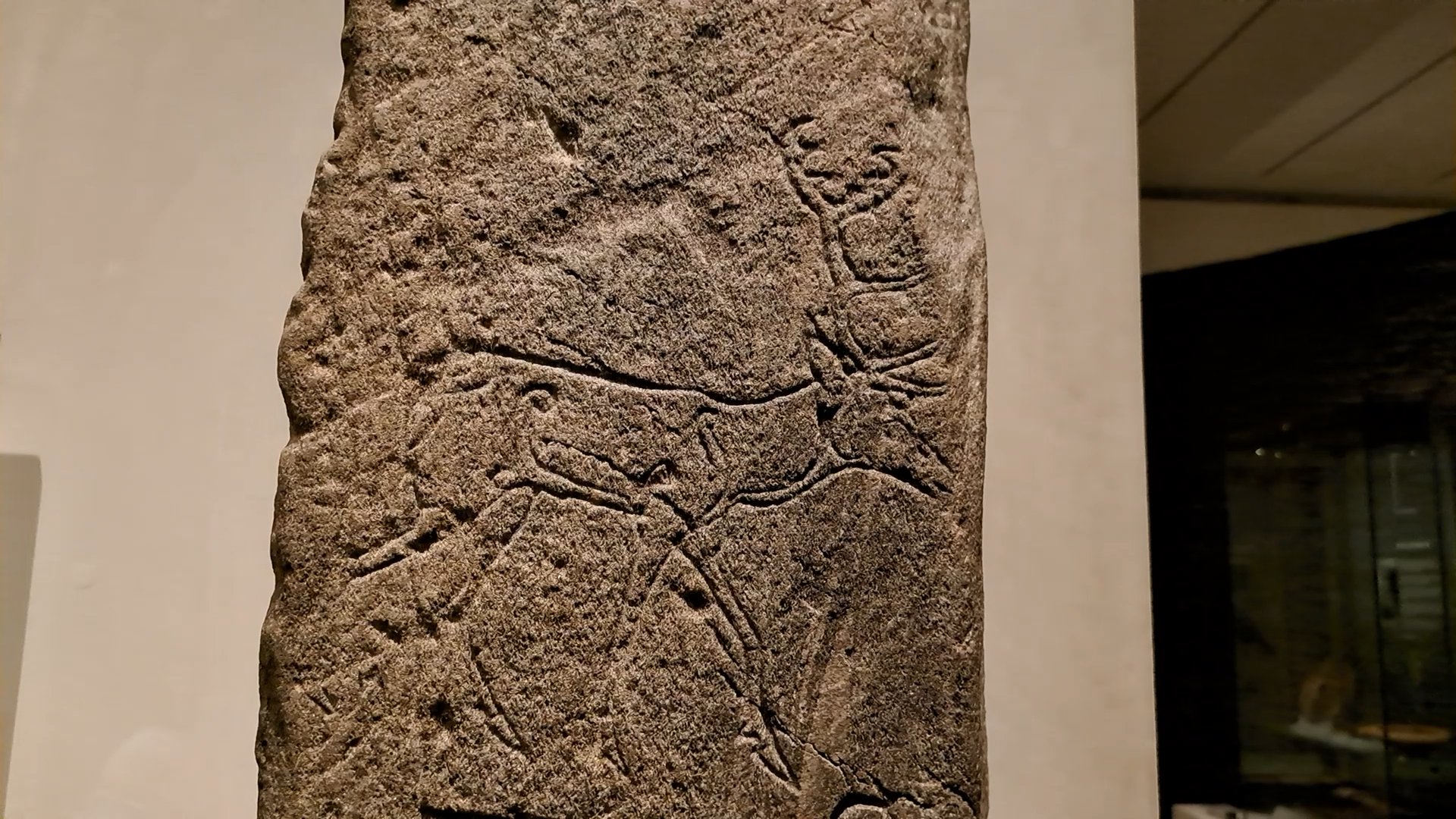
In our major towns and cities, a regime of blinding lights and grating noise constantly disrupts the life patterns of birds, insects and many other wildlife groups. We humans are also losing our sense of meaning and orientation within the built environment. We’re forced to live in drab tower blocks and work in piercing glass towers, the products of failed social programmes and the accrual of capital as master value. Whole movements in architecture have dedicated themselves to stripping away any semblance of beauty, tradition, warmth or comfort from our buildings, such as ascetic modernism, harsh brutalism, technophilic structural expressionism and even the regrettably austere zoomorphic and biomorphic attempts at architecture. Then there’s the deliberate discordancy of garish postmodern vanity projects, which fit in nowhere, and the artless exercises in technical proficiency posing as buildings, essentially a mix of mechanical mastery and randomness of design. But, alas, we’re too stupid to know what’s best for us!
Untethered from our environment, we more easily succumb to a craving for the goods we see in shop windows, which reflect ourselves tenfold as though we had entered a hall of mirrors. Looking up, obnoxious advertisements glare down at us, promising a life well lived while obscuring the landscape. The result of all of this is that the urban world is at once deeply human and yet not fit for human living at all. A return to local and traditional building practices and limiting our structures to the human scale could help us to feel more at ease in our surroundings and alleviate threats to wildlife. I am most enthusiastic about a renewed appreciation for carving, painting and engraving scenes honouring not only the human form but also that of nonhumans animals, plants, and, dare I say, mythical creatures and gods. Abstract geometric symbols have their place also. After all, adornment was once ubiquitous, spanning an immense period of time from the cave paintings of Lascaux to Art Deco, roughly speaking. And I don’t necessarily make a distinction between traditional supernatural/religious and natural/secular aesthetics here. Any storied and beautiful work is a revolt against the cold sheen that chills one’s bones in this unfortunate slice of time in which we’re living.
In the realm of art we appear to have collectively adopted an outlook that scorns beauty and tradition, exalting irrationality and crudeness instead. It’s extremely difficult to ignore the abundance of phallic or scatological installations, not to mention the amorphous blobs and heaps of rusted metal, which grow out of our public spaces like cancerous growths. We could erect statues representing the aspirational human form or construct dazzling murals dedicated to the untouched natural world. Instead, works of shock and debasement predominate, all made in the belief that art must reflect an immutably ugly and meaningless world. This worldview puts one in mind of a prisoner scrawling hateful profanities on his cell wall instead of lessening his anguish by adorning the space he has left to him with birds, trees and fire. This isn’t to say that dark and stirring art shouldn’t be made, yet these creations stand a world apart from, say, a masterfully sculpted vanitas statue reminding us that we are to die.
Retreating inside galleries for solace, we’re likely to be met with the same disregard for anything good and true due to the dominance of the cynical art market, which continues to make fools of us all. And, sadly, we must now contend with increasing attacks on artworks and exhibits by environmental activists who seek to destroy or make more difficult to appreciate what’s good in the world as a comment on the loss of the good. What we need is an additive approach, one based on an outlook of conservative gratitude. Indeed, even places of worship have been infiltrated, and we needn’t follow a traditional religion to bemoan the complete disregard for the old and reverent here as well, particularly in the form of hideous concept pieces. Thus do we scorn the gifts left to us by the makers of the past.
Art and architecture appear to be moving in such a way as to detach and disconnect from the world. What hope can we have of recalling Earth’s heritage, then, if we are to physically leave the planet behind in the future? Unlike many in the area of nature studies, I believe that space exploration isn’t an inherently masculinist and Promethean endeavour whose operations should be halted at once. However, it’s disheartening to think that, should we ever establish settlements on other worlds, we’ll continue to make in such a way as to promote the sterile and new over the fertile and storied. One hopes that the people of the future will remember Earth by adorning their homes and public spaces with images representing this planet’s rich array of flora and fauna, as well as the many stories we used to tell ourselves.
“Beauty is vanishing from our world because we live as though it did not matter.”
– Sir Roger Scruton
“The decorative and the ornamental are characteristic of things. They are life’s way of telling us that life is about more than mere functioning.”
– Byung-Chul Han
“Forcing themselves on our perception, those low and facile signs clog up the landscape, which itself is more difficult, discreet, silent, and often dying because unseen by any saving perception.”
– Michel Serres
II
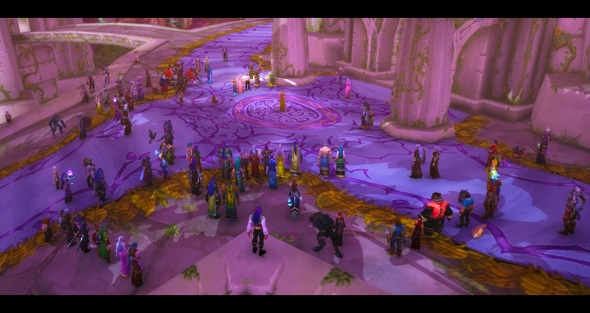
For me, the word thither signifies walking with the Earth and keeping it within us when the iron will of modernity seeks to imprison us physically and mentally. The word also suggests a related movement toward that place or to the other side. Art can take us there, opening our hearts and minds. I especially enjoy engaging with creative works that allow me to inhabit new worlds more connected to the past and to nature, or, if representing our own world, help develop unique ways of perceiving our surroundings. In regards to fiction, inhabiting Tolkien’s Arda helped us to discover Earth anew, while Lord Dunsany’s fantasy-reality tales revealed to me the importance of wildness in the built environment, Susanna Clarke’s Piranesi awakened me to deeper contemplative faculties and to the good in society, and Mervyn Peake’s Gormenghast trilogy informed me about what works and what doesn’t in tradition. In virtual reality, my time adventuring across Azeroth in World of Warcraft opened my eyes to ecocentrism and the importance of heritage, while the ludic wonders of games such as Gorogoa, Journey, The Longing, and Monument Valley have inspired with their unique perspectives on space and time. And, to give just two examples in the realm of fine art, I think the portal paintings of Zdzisław Beksiński extol the power of liminality and change and that Theodor Kittelsen’s Huldra Forsvant speaks to a deep yearning for a lost world that moves many of us today. Finally, films like Every Star by Yawen Zheng and The Man Who Planted Trees, adapted from Giono’s novel, guide me forward with their visionary themes of connection and enrichment. These are but a handful of many examples of works of art that help me walk with the Earth.
“What brings you here?”
– A question asked by a Night Elf (in the world of Azeroth)
“Wild groves, sacred grounds fade to vastness
Mother Moon, cast your spell on these fields, let the boughs paint ghostly shades on the trail
to a different world.”
– The Raven Child, sung by Hansi Kürsch
“Why should a man be scorned if, finding himself in prison, he tries to get out and go home? Or if, when he cannot do so, he thinks and talks about other topics than jailers and prison-walls?”
– J.R.R. Tolkien
READING LIST
(To be continually refined)
Non-Fiction
- A Sand County Almanac by Aldo Leopold
- A Sense of Wonder Towards Nature: Healing the Planet through Belonging by Hadyn Washington
- A Short History of Decay by Emil Cioran
- Architecture: A Visual History by Jonathan Glancey
- Art and Enchantment: How Wonder Works and Enchantment: Wonder in Modern Life by Patrick Curry
- Beauty by Roger Scruton
- Capitalism and the Death Drive by Byung-Chul Han
- Cohabiting Earth, ed. by Joe Gray and Eileen Crist
- Darkness: A Cultural History by Nina Edwards
- Dialectic of Enlightenment by Theodor Adorno and Max Horkheimer
- Diogenes the Cynic: Sayings and Anecdotes with Other Popular Moralists
- Ecological Ethics by Patrick Curry
- Ecological Literature and the Critique of Anthropocentrism by Brian L. Moore
- Environmental Ethics by Robin Attfield
- Smoke Gets in Your Eyes and From Here to Eternity by Caitlin Doughty
- Heraclitus Fragments, ed. Philip Wheelwright
- How to be Animal by Melanie Challenger
- Imagination and Creativity by Michael Beaney
- In Praise of Shadows by Jun’ichirō Tanizaki
- Letters to a Young Scientist by E O Wilson
- Lost Knowledge of the Imagination by Gary Lachman
- Malfeasance: Appropriation Through Pollution? by Michel Serres
- Meditations by Marcus Aurelius
- Meeting with Remarkable Manuscripts by Christopher de Hamel
- Mythology: Timeless Tales of Gods and Heroes by Edith Hamilton
- Natural History: A Selection by Pliny the Elder
- Non-things: Upheaval in the Lifeworld by Byung-Chul Han
- Nowadays, Patches of Sunlight, and The Donnellan Lectures by Lord Dunsany
- On Beauty and Being Just by Elaine Scarry
- On Fairy-Stories by J.R.R. Tolkien
- Oxford History of Art series (Classical Art, Early Medieval Art, Medieval Art)
- Sacred Nature by Karen Armstrong
- Saving Beauty by Byung-Chul Han
- Symbols and Allegories in Art Matilde Battistini
- The Book of Legendary Lands by Umberto Eco
- The Denial of Death by Ernst Becker
- The Forest in Folklore and Mythology by Alexander Porteous
- The Gothic by Nick Groom
- The New Puritans: How the Religion of Social Justice Captured the Western World by Andrew Doyle
- The Passion of the Western Mind by Richard Tarnas
- The Poetics of Space by Gaston Bachelard
- The Protestant Ethic and the Spirit of Capitalism by Max Weber
- The Shortest History of Europe by John Hirst
- The Tree by John Fowles
- The Worm at the Core by Solomon, Greenberg and Pyszczynski
- To See Clearly: Why Ruskin Matters by Suzanne Cooper
- Wabi-sabi: The Japanese Art of Impermanence by Andrew Juniper
- Whatever Happened to Tradition? by Tim Stanley
- Wisdom of the Ancients by Neil Oliver
- Wonder: A Grammar by Sophia Vasalou
- “Wonder” and Other Essays by R.W. Hepburn
Fiction
- Frankenstein by Mary Shelley
- Labyrinths by Jorge Luis Borges
- Lud-in-the-Mist by Hope Mirrlees
- Mythago Wood and Lavondyss by Robert Holdstock
- Narcissus and Goldmund by Herman Hesse
- Pan and Hunger by Knut Hamsun
- Piranesi by Susanna Clarke
- The Baron in the Trees by Italo Calvino
- The Call of the Wild, White Fang and To Build a Fire by Jack London
- The Cathedral of Mist by Paul Willems
- The Complete Fairy Tales and Phantastes: A Faerie Romance by George MacDonald
- The Dark Domain by Stefan Grabinski
- The Dark Eidolon and other Fantasies by Clark Ashton Smith
- The Death of Ivan Ilyich and How Much Land Does a Man Need? by Leo Tolstoy
- The Door in the Wall by H.G. Wells
- The Gormenghast Trilogy and Boy in Darkness by Mervyn Peake
- The Iliad of Homer
- The Jungle Books by Rudyard Kipling
- The Little Prince by Antoine de Saint-Exupéry
- The Mabinogion (various authors)
- The Man Who Planted Trees by Jean Giono
- The Memory Police / Quiet Crystallization (Hisoyaka na Kesshō) by Yoko Ogawa
- The novellas of Algernon Blackwood (The Willows/Ancient Sorceries/The Wendigo/The Man Whom the Trees Loved)
- The Other Side by Alfred Kubin
- The poetry of John Clare
- The poetry of S.T. Coleridge
- The Wood Beyond the World by William Morris
- The works of J.R.R. Tolkien, especially The Lord of the Rings, The Silmarillion, Smith of Wootton Major and Leaf By Niggle
- The works of Lord Dunsany, especially The King of Elfland’s Daughter, the Pegāna mythology and the short story collections (ranging from The Sword of Welleran and Other Stories to The Last Book of Wonder)
- The Worm Ouroboros by E.R. Eddison
- ‘Twixt Dog and Wolf by C.F. Keary
 Taylor Hood